The Real Impact of Transit Time vs Handling Quality on Flower Performance
The Real Impact of Transit Time vs Handling Quality on Flower Performance
There is a conversation that comes up regularly in flower sourcing, and it usually sounds something like this: “The transit time is too long, that’s why the flowers are not performing.”
Read More
Transit time is a reasonable thing to pay attention to. It is measurable, easy to compare between suppliers and naturally feels like a significant factor in how flowers arrive. But in our experience, it is rarely the whole story and sometimes it is not even the most important part.
What we have seen, consistently, across years of moving flowers from Kenya to markets around the world, is that handling quality has a far greater impact on flower performance than transit time alone. A well-handled flower with a longer journey will almost always outperform a poorly handled flower that arrived faster.
Understanding why this is the case, and what it means in practice, is genuinely useful if you are trying to build a more reliable, more predictable supply chain.
What Actually Depletes a Flower’s Vase Life
When a cut flower leaves the farm, it begins a process of slow deterioration. The speed of that deterioration is influenced by a number of factors and temperature management, handling and hydration are at the top of the list.
Every time a flower is exposed to ambient temperatures, even briefly, it accelerates the ageing process. Every unnecessary movement, every rough handling point, every period without adequate hydration chips away at the vase life that was built into the stem at the farm.
Transit time matters because more time in transit creates more opportunities for these things to go wrong. But transit time on its own, in a well-managed cold chain with consistent handling, is far less damaging than people often assume.
A flower sitting correctly hydrated, at the right temperature, in a well-packed box, can travel a long distance and arrive in excellent condition. A flower that has been badly handled, left in ambient temperatures during consolidation or packed under pressure can deteriorate significantly, regardless of how quickly it arrives.
The Handling Points That Matter Most
If you want to understand where flower performance is really made or lost, it helps to map the handling points across the supply chain and think honestly about what happens at each one.
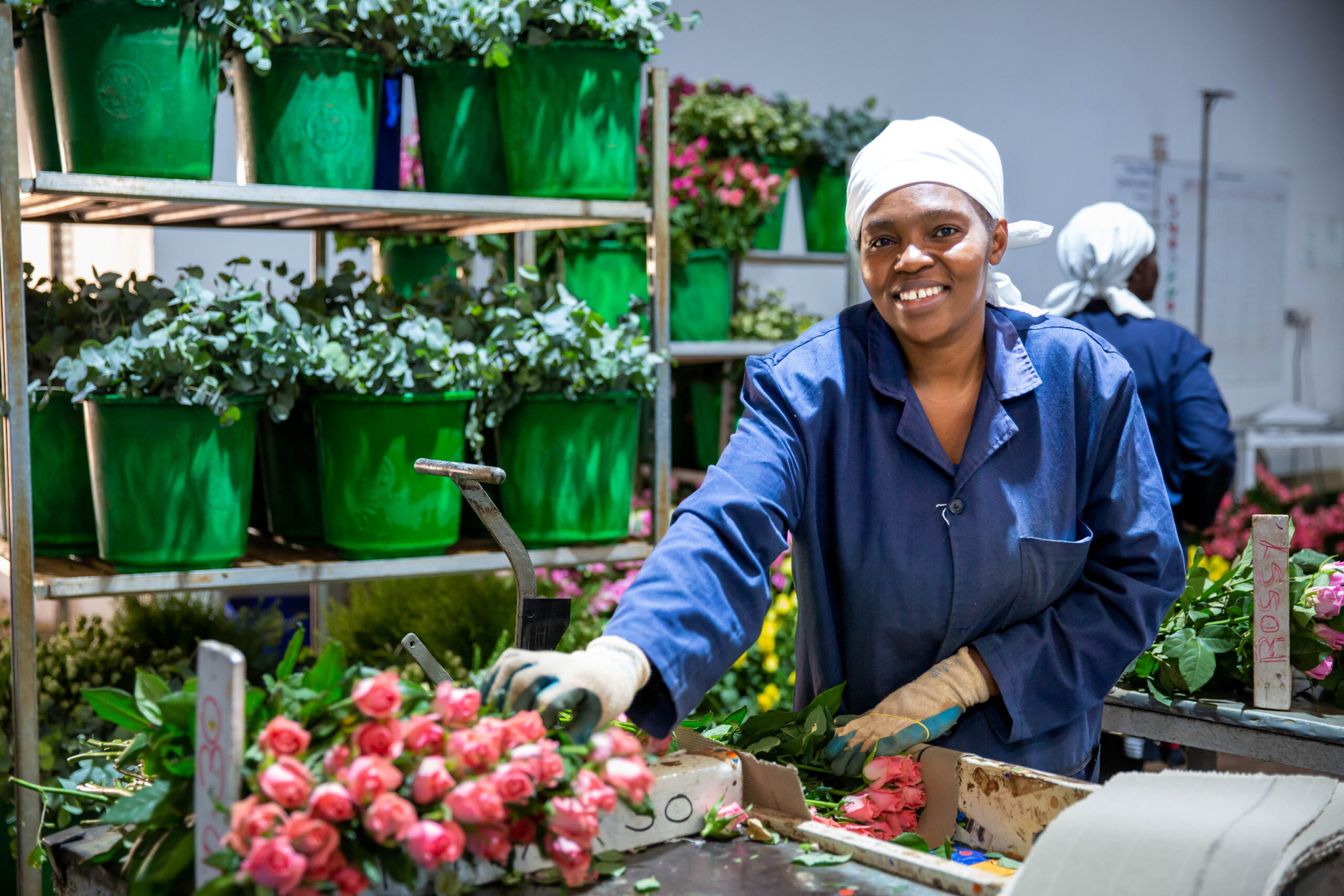
On the farm, at cutting. The timing of the cut, the temperature of the water used for initial hydration and the speed at which flowers move from field to cooler all set the baseline for what happens next. A flower that is stressed at the point of cutting starts the journey at a disadvantage.
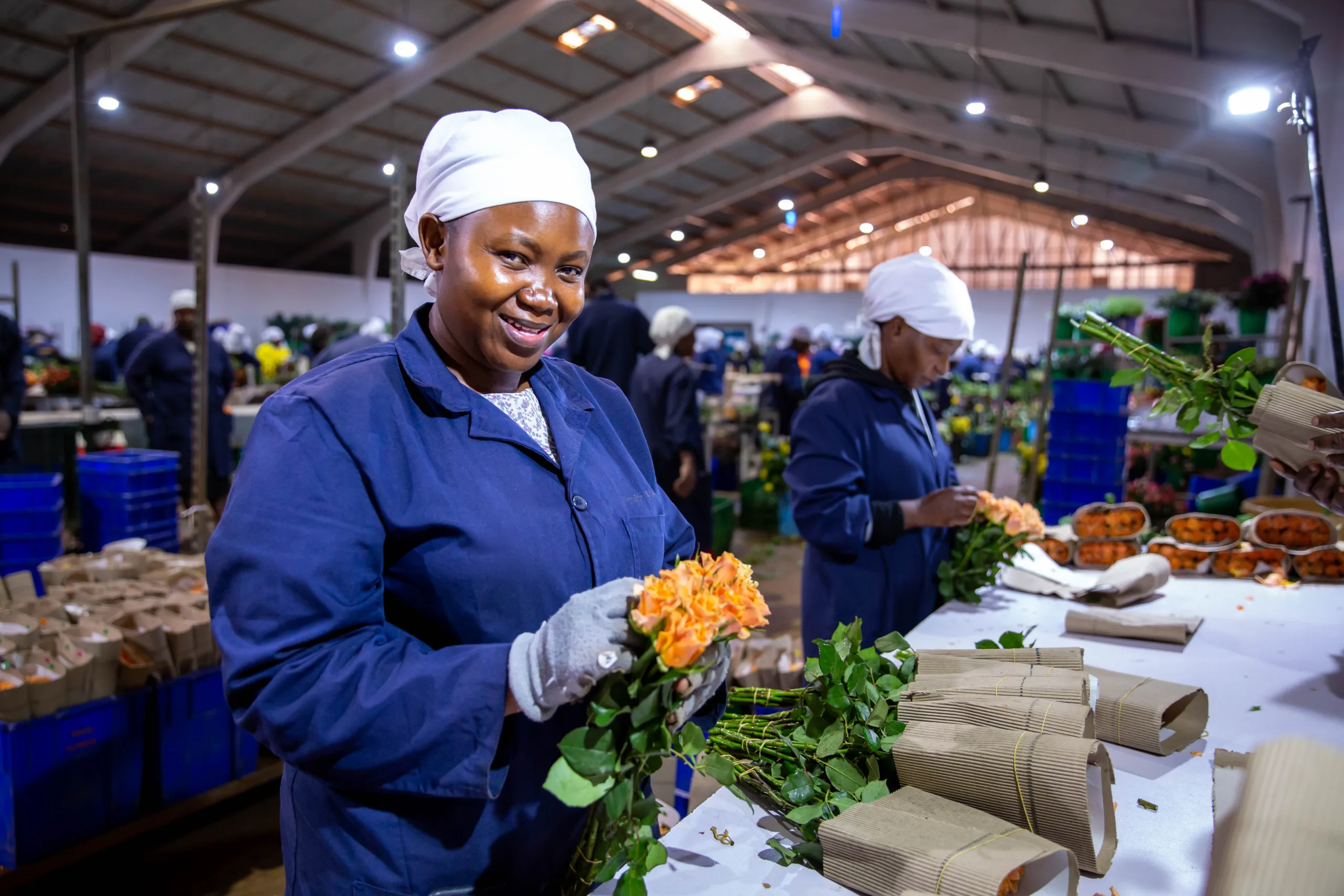
During grading and packing. This is where stems are sorted, conditioned and prepared for export. How flowers are handled here; whether they are kept cool, how quickly the process moves, whether stems are properly hydrated, has a significant impact on what they look like when they arrive.
At the airport and in the cold store. There is often a period between packing and loading where flowers sit. How they are managed during this window matters. Temperature fluctuations, even short ones, are damaging in ways that are not always immediately visible but show up in reduced vase life later.
During transit itself. Air freight for cut flowers is generally fast enough that the journey itself, when temperatures are maintained, is not the primary risk. The risk is more often at the beginning and end of the journey, in how flowers are handled before loading and after landing. If you consider sea-freight – those flowers can be on the water for 25 days +. With rigorously controlled temperatures, humidity and CO2 levels, these flowers can still out compete a poorly handled air-freighted flower.
At your end — unloading, conditioning, storage. This is often overlooked, but what happens when flowers arrive at your facility matters enormously. How quickly they are conditioned, what temperature the water is, whether they are given time to rehydrate properly and how they are stored before sale all affect the performance your customers experience.
Why This Changes How You Should Evaluate Suppliers
If transit time is not the defining factor in flower performance, then evaluating a supplier primarily on the speed of their route to market is not the most useful measure.
What matters more is understanding what a supplier does at every handling point in their supply chain and how much visibility they have into what is happening between farm and departure.
At The Flower Hub™, our team is on the ground in Kenya precisely because we believe this is where performance is most directly influenced. Our QC team is present on farms, monitors product through grading and packing, and follows flowers through to the point of export. That presence allows us to manage handling quality actively, rather than hoping for the best and finding out later.
A Practical Example
Consider two scenarios.
In the first, flowers travel from Kenya to the Netherlands in 48 hours. But during packing, they were left in ambient temperatures for three hours during a handling delay. They were packed tightly to meet a last-minute volume requirement. They were not fully hydrated before boxing.
In the second scenario, the same variety travels to the Netherlands in 60 hours. But they were cut at the right stage, moved immediately into cold water and fully hydrated, packed correctly with space, maintained at the right temperature throughout and loaded efficiently at the airport.
Which flowers would you rather receive? In our experience, the answer is almost always the second, despite the longer journey time. Because the variables that actually determine performance were managed correctly throughout.
What This Means for Your Supply Chain
If you are experiencing inconsistent performance from your flower supply, whether that is shorter-than-expected vase life, variation in quality between shipments or unexplained deterioration, it is worth looking beyond transit time as the primary suspect.
The questions worth asking are:
- What is the handling process between farm and export, and who is responsible for it?
- Is there consistent temperature management at every stage, including the consolidation and packing stages?
- What is the condition of the flower at the point it leaves Kenya, and how is that being verified?
- What happens in the first 24 hours after your flowers arrive at your facility?
These are the questions that tend to surface the real causes of performance issues and provide the answers that lead to meaningful, lasting improvements.
Our Approach at The Flower Hub™
We are not going to tell you that transit time is irrelevant. It is a factor, and we work hard to move product efficiently and quickly.
But we invest most heavily in the things we believe have the greatest impact: our presence on the ground, our relationships with growers, our quality control at every stage and our ability to give you visibility into what is happening before your flowers arrive.
Because we believe that a flower handled with care will almost always outperform one that simply arrived faster.
If you would like to talk through how we manage quality across the supply chain, or if you are trying to understand what is driving inconsistency in your current supply, we would be glad to have that conversation.
Talk to our team about building a more consistent, better-performing supply chain. Get in touch at The Flower Hub™: www.theflowerhub.com/contact